
Better Dirt Than Dead
A June container garden lesson from Echo Canyon

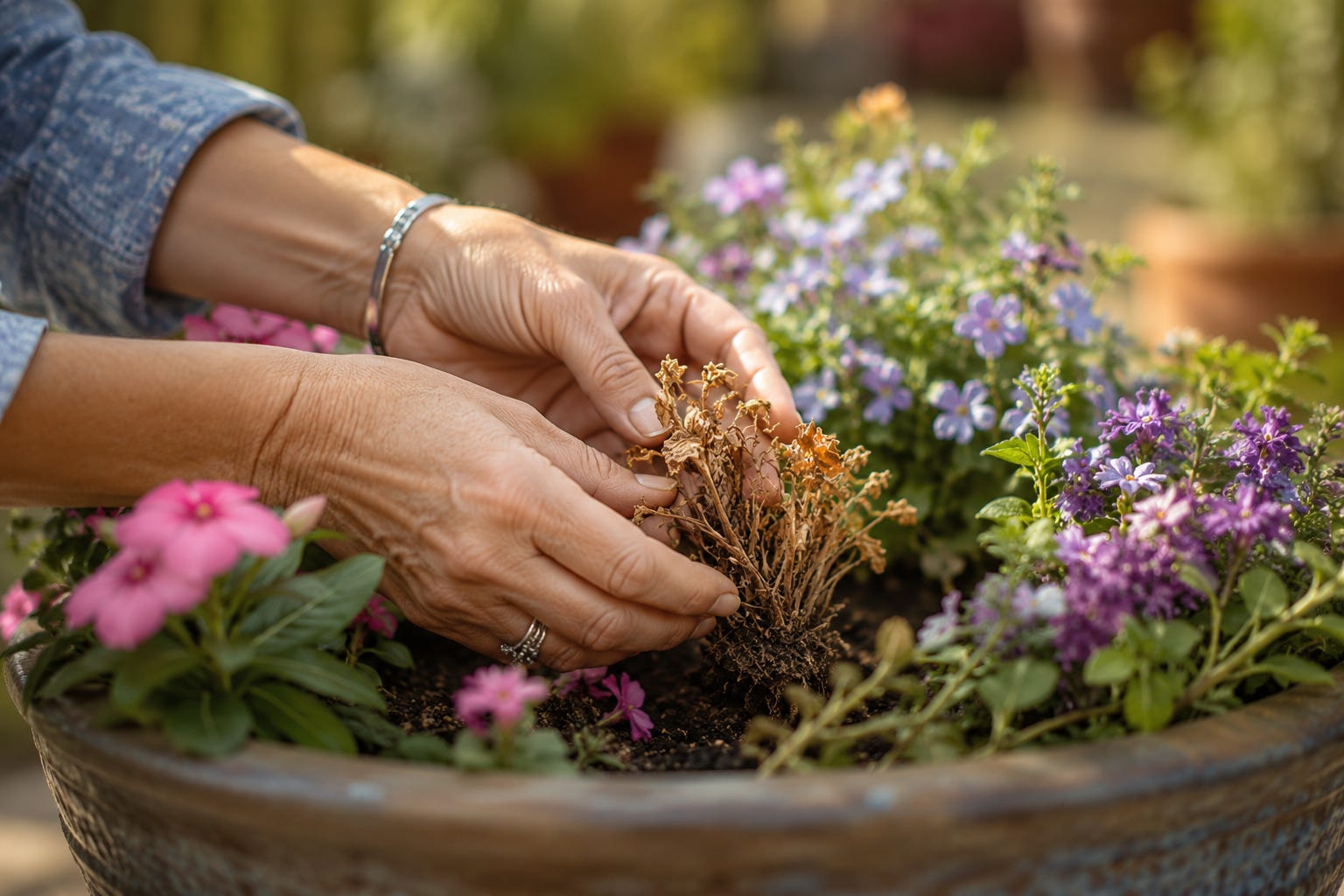
A plant that looked promising in April may suddenly turn crispy. A flower that gave you a few good weeks may decide it has had enough. One section of a mixed pot may still look fine while another plant has clearly crossed the line from “stressed” to “done.”
That is when a lot of gardeners hesitate.
They leave the dead plant in place because they are not sure what to do next. They feel bad pulling it out. They think maybe it will come back. Or they tell themselves they will deal with it later, which usually means they keep walking past it for another two weeks feeling guilty.
I have said this for years, and I still mean it:
‘Better dirt than dead.”
If a plant is truly gone, take it out.
You do not have to replant immediately. You do not have to solve the whole pot that minute. You do not have to turn a small loss into a big project. But you do need to remove the plant that is no longer contributing anything except discouragement.
A dead plant in a pot does more than look bad. It keeps reminding you that something failed. It makes the whole arrangement look worse than it is. It can hide what is still working. And if the plant died from disease or root trouble, leaving it there may not help the rest of the pot.
So in June, I want you to walk your patio with a little honesty.
Not criticism. Honesty.
Look at each pot and ask: Is this plant tired, or is it gone?
A tired plant may still have green stems, new growth tucked inside, or a chance to recover if you adjust the care. A dead plant is different. It is brittle, brown, collapsing, or clearly finished. It is not resting. It is not waiting for encouragement. It is done.
That plant can come out.
A Lesson from a Story
In Echo Canyon, Riley learned this the same way most gardeners do, by standing in front of a pot too long.
She was on the veranda early, before the heat climbed over the canyon wall. One of the summer pots near the steps had been bothering her for days. The vinca still looked good. The scaevola was starting to trail. But one plant in the front had crisped into a stiff little brown reminder of a decision she had been avoiding.
Ben came up the path carrying two mugs of coffee.
“You’re staring at that pot like it owes you money,” he said.
“It might,” Riley said. “I paid for that plant.”
Ben handed her a mug and looked at the pot. “Is it coming back?”
Riley crouched, touched the stem, and it snapped between her fingers.
“No.”
“Then why is it still there?”
She looked at the empty space it would leave. That was the part she disliked. The gap. The evidence.
Ben nodded toward the trowel on the bench. “Better dirt than dead.”
Riley laughed because she had heard him say it before, usually when she was trying to pretend something still had potential.
This time, she pulled the plant out.
The pot looked better immediately.
Not finished. Certainly not perfect.
Better.
That is the point.
Sometimes the first improvement is not adding something new. It is removing what is clearly done.
Once the dead plant is out, you can make a calmer decision. Maybe the remaining plants will fill in. Maybe you will tuck in one replacement. Maybe you will add a small trailing plant to cover the edge. Maybe you will leave the open space alone until fall.
All of those are valid choices.
What I do not want is for you to keep a dead plant in a pot because you think an empty spot is worse.
It usually is not.
An empty space gives you options. A dead plant gives you guilt.
What to Do After You Pull It Out
Once the plant is removed, look at the roots and the surrounding potting mix.
If the roots are dry and brittle, the plant may have failed from drying out, root stress, or simply not getting established well enough before the heat arrived.
If the roots are mushy or smell sour, you may be looking at too much water, poor drainage, or disease.
If the root ball still looks like the original nursery shape and never spread into the potting mix, the plant may not have settled in. That can happen when the root ball was too dry at planting, too tight, or not opened up enough.
You do not need to turn this into a full investigation every time, but it is worth noticing. Dead plants can teach you something if you look before tossing them.
Then smooth the potting mix back into place. If the hole is large, add a little fresh potting mix. Water the remaining plants as needed, based on the whole pot, not the empty spot.
And then stop.
You don't have to rush to the nursery that day.
In June, replacing a plant is not always the best first move. Sometimes the smarter choice is to let the rest of the pot settle and see whether the nearby plants fill the space.
If you do replace it, choose carefully. Do not tuck a delicate, high-maintenance plant into a hot pot just because there is an opening. Choose something that matches the sun, water, and size of the plants already there.
A replacement plant should make the pot easier to enjoy, not harder to manage.
A Simple June Pot Check
This week, choose one pot and do this quick check.
First, remove anything truly dead. Not tired. Not resting. Dead.
Second, look for plants that are still alive but struggling. Check whether they are dry, too wet, crowded, shaded, or simply in too much sun.
Third, look at the open spaces. Can the existing plants grow into them? Would a trailing plant help cover the edge? Would the pot look fine if you left that spot empty for now?
Fourth, decide whether this pot deserves more investment right now. Some pots do. Some are better left to make it through summer with what they already have.
This is one of the simplest ways to reduce June garden frustration.
🥀 Pull out what is gone.
🌺 Keep what is working.
🆘 Do not make every empty space an emergency.
Better dirt than dead.
Happy potting,
Marylee 😎
This little Echo Canyon moment comes from the same world as my creative nonfiction book, Riley’s Garden Oasis and first novel, Whispers of Echo Canyon, where gardens, friendship, and second chapters all seem to grow together. If you enjoy seeing desert gardening woven into story, you may enjoy meeting the women of Echo Canyon.
All of my books are available on Amazon.